Oppana
Oppana (Malayalam: α┤Æα┤¬α╡ìα┤¬α┤¿) is a popular form of social entertainment among the Mappila community of Kerala, south India, prevalent all over, especially in the northern district of Malappuram. The Oppana Pattu might have come from Tamil culture. The Malayalam word Oppana Pattu is the derivation of Tamil word ‘Oppanai Pattu’. In Tmail ‘Oppanai’ means make up. Oppana was originated on the occasion of make of Muslim brides. Now Oppana has been extinct in Tamil Nadu. But in Kerala this art form has been revived with much popularity in performing stages of Youth Festivals of student community.
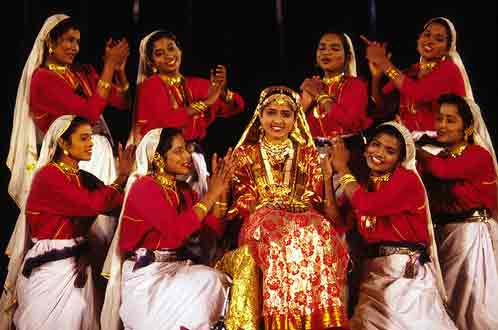
Oppana, a dance form among the Mappila community
Oppana is generally presented by females, numbering about fifteen including musicians, on a wedding day. The bride dressed in all finery, covered with gold 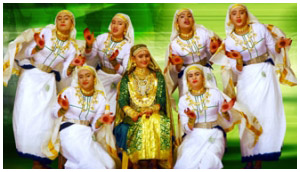 ornaments and her palms and feet adorned with an intricately woven pattern of mylanchi (henna), sits amidst the circle of dancers. She is the chief spectator sitting on a peetam (chair), around which the singing and dancing take place. While they sing, they clap their hands rhythmically and move around the bride using simple steps. Two or three girls begin the songs and the rest join in chorus.
Sometime Oppana is also presented by males to entertain the bridegroom. It usually takes place just before the bridegroom leaves for the bride’s residence where the Nikah (marriage) takes place or at the time he enters the Maniyara.
Harmonium, Tabla, Ganjira and Elathaalam are the musical instruments employed for this performance. Only the Mappilapaattu will be sung on the occasion.
The word Oppana may have been derived from an Arabic form Afna. There are two types of Oppana, one is Oppana chayal another is Oppana murukkam. When Oppana chayal is performed, they do not clap their hands. If it begins with Chayal it would also end with Chayal only.
For more information: https://en.wikipedia.org/wiki/Oppana